
Mahjong Tiles 101: Suits, Dragons, Jokers, and Flowers Explained
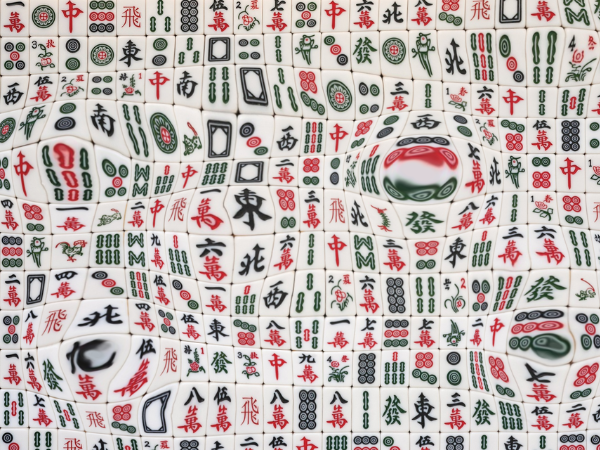
If you’re learning how to play American mahjong, the tiles are often the first thing that feels overwhelming. At a glance, a mahjong set can look like a small museum of mysterious symbols. Dots, bamboo, characters, dragons, winds, jokers, flowers. It’s a lot to take in.
The good news is that once you understand the basic groups of tiles, the entire set starts to make sense. In fact, most players are surprised by how quickly the tiles become familiar.
Let’s walk through the main types of mahjong tiles and what they do in the game.
The Three Suits
The foundation of mahjong is built around three numbered suits.
Each suit contains tiles numbered one through nine, with four copies of each tile. These suits are where most hands are built, and they quickly become the tiles you recognize first.
Dots
Dot tiles (sometimes called circles) show small round dots arranged in patterns from one through nine.
These are usually the easiest tiles for beginners to recognize because the number of dots corresponds directly to the number on the tile.
For example, the “three dot” tile shows three dots.
Bamboo
Bamboo tiles represent sticks of bamboo arranged from one through nine.
Some bamboo tiles are illustrated with simple sticks, while others include more decorative designs. In most sets, the one bamboo tile is illustrated with a small bird rather and typically referred to as “one bam bird.”
Once you’ve played a few hands, bamboo tiles become just as easy to spot as dots.
Characters (Cracks)
The third suit is often called characters or cracks.
These tiles include the Chinese character for the number along with a symbol that represents ten thousand. To new players, these tiles can look the most unfamiliar.
But once you start playing regularly, you’ll begin to recognize them quickly by pattern and color rather than by reading the characters.
Winds
In addition to the numbered suits, mahjong includes four wind tiles, each with a corresponding direction:
• East
• South
• West
• North
Each wind tile appears four times in the set.
In American mahjong, winds are often used to form pairs, pungs, or other combinations depending on the hands listed on the annual card.
Dragons
Dragon tiles are another key group in a mahjong set.
There are three dragon tiles:
• Red dragon
• Green dragon
• White dragon
Like the winds, each dragon appears four times in the set.
In American mahjong, dragons also have an important relationship with the numbered suits. Each dragon corresponds to one of the suits:
• Red dragons go with the character (crack) suit
• Green dragons go with the bamboo suit
• White dragons go with the dot suit
You’ll often see this relationship reflected in the hands on the annual card, where a dragon is used alongside tiles from its corresponding suit.
The white dragon is also the tile that tends to confuse beginners at first. In many mahjong sets, the white dragon appears as a completely blank tile with a simple frame around the edge.
Which means that, the first time you see it, it often looks less like a dragon and more like a small bar of soap.
Once someone points it out, though, you’ll never mistake it again.
Over time, players begin to recognize all three dragons instantly because of their colors and distinctive designs.
Flowers
Flower tiles are slightly different.
Unlike most tiles in the set, which appear four times, flower tiles are typically unique, with eight individual flower tiles included in the set.
In many sets, in addition to a flower image, many flower tiles also have either an indication of a season (aut, sum, win, spr) or a number. Critically, in American mahjong, these distinctions are ignored and all flower tiles are treated the same.
Jokers
Jokers are one of the defining features of American mahjong.
These tiles act as wild cards and can substitute for other tiles in many combinations listed on the card.
However, jokers cannot be used in every situation. For example, they are not allowed in pairs or single tiles. Stated differently, jokers can only be used for pongs (3 of a kind), kongs (4 of a kind), and quints (5 of a kind).
Because jokers are so flexible, experienced players often think carefully about when and where to use them.
They can dramatically change the course of a hand.
Why the Tiles Start to Feel Familiar
At first, a mahjong set may feel like a lot to absorb.
But after just a few games, most players stop consciously identifying each tile. Instead, they begin recognizing patterns almost automatically.
A three-dot tile becomes instantly recognizable. A red dragon stands out immediately. Bamboo tiles start to feel distinct.
The brain quickly adapts.
Before long, the tiles that once felt mysterious begin to feel like old friends.
Pull Up a Chair
Learning the mahjong tiles is the first step toward understanding the game.
Once the suits, winds, dragons, flowers, and jokers become familiar, the strategy of the game starts to unfold naturally.
And like many parts of mahjong, the best way to learn the tiles isn’t by memorizing them.
It’s by sitting down at the table and playing.
If You're New to Mahjong
If you’re learning how to play American mahjong, our beginner guides walk through the rules of the game, how a hand unfolds, and how the tiles come together during play.