
Stop the Panic Pivot: How to Actually Commit to a Mahjong Hand
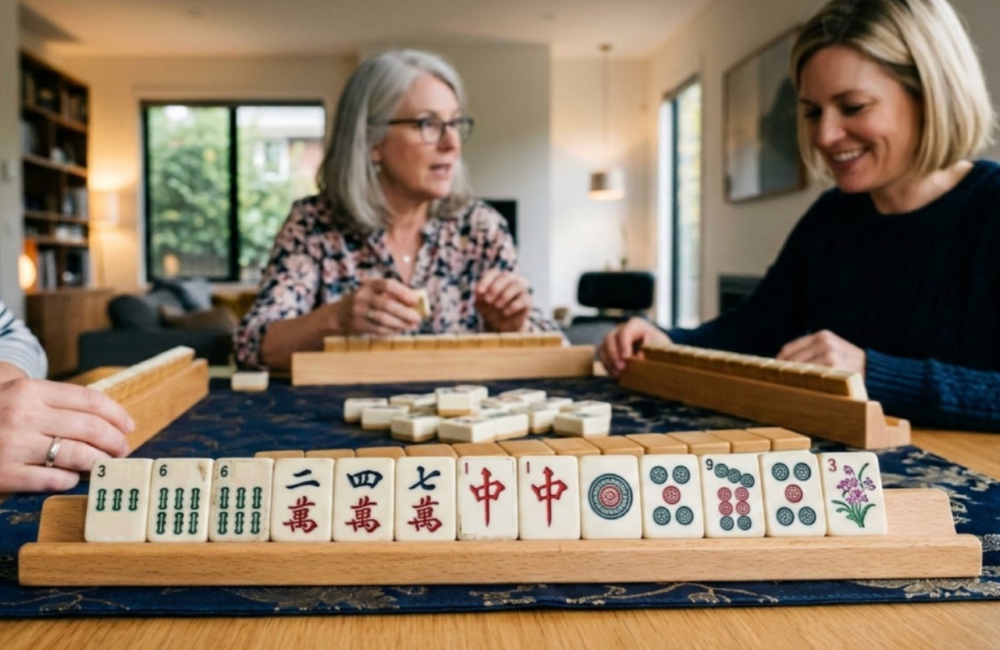
You've sorted your tiles. You've spotted a hand you like. You've decided, with great confidence, that this is your hand. This is the one.
Then someone throws a tile you weren't expecting. Someone else picks up a discard you needed. And suddenly your very good plan feels like a very bad idea. So you abandon it entirely, start chasing something else, and end up nowhere near mahjong with a rack full of tiles that don't talk to each other.
Welcome to the panic pivot. Every beginner does it. Most intermediate players still do it more than they'd like to admit.
Here's the thing: switching hands isn't always wrong. But switching hands in a moment of anxiety almost always is.
Panic is not a strategy.
The pivot becomes a problem when it's driven by fear rather than information. Someone picks up a tile and you think: they must be close, my hand is doomed, I need a new plan. But you don't actually know they're close. You've just spooked yourself. And now instead of one focused pursuit, you're managing a mess.
The calmer players at the table aren't necessarily luckier or more experienced. They've just learned to distinguish between a real signal and a feeling.
When staying the course is the right call.
If you're several tiles into a hand and reasonably close, the bar for switching should be high. Ask yourself: has something actually changed, or does it just feel like it has? A single bad draw isn't a reason to start over. Neither is watching someone else play confidently. Confidence at the table can be a bluff, and even when it isn't, their good hand doesn't make yours worse.
Give your hand a fair chance before you give up on it.
When pivoting is actually smart.
That said, there are real moments to change course. If two or three of the tiles you need have already been discarded, the math has shifted and your hand may genuinely be unworkable. If the game is moving fast and you're still far from mahjong, a simpler hand might serve you better than a beautiful one. Pivoting with clear eyes and a plan is strategy. Pivoting because you panicked is just chaos with extra steps.
The underlying skill is patience.
More than any specific rule, what separates steady players from frantic ones is the ability to sit with uncertainty. Mahjong is a game of incomplete information. You will never know exactly what everyone else is holding. Learning to make thoughtful decisions anyway, without abandoning your plan every time something feels uncertain, is what the game is really teaching you.
The tiles will sort themselves out. Take a breath. Stay the course.