
The Two-Hour Vacation You Didn’t Know You Needed
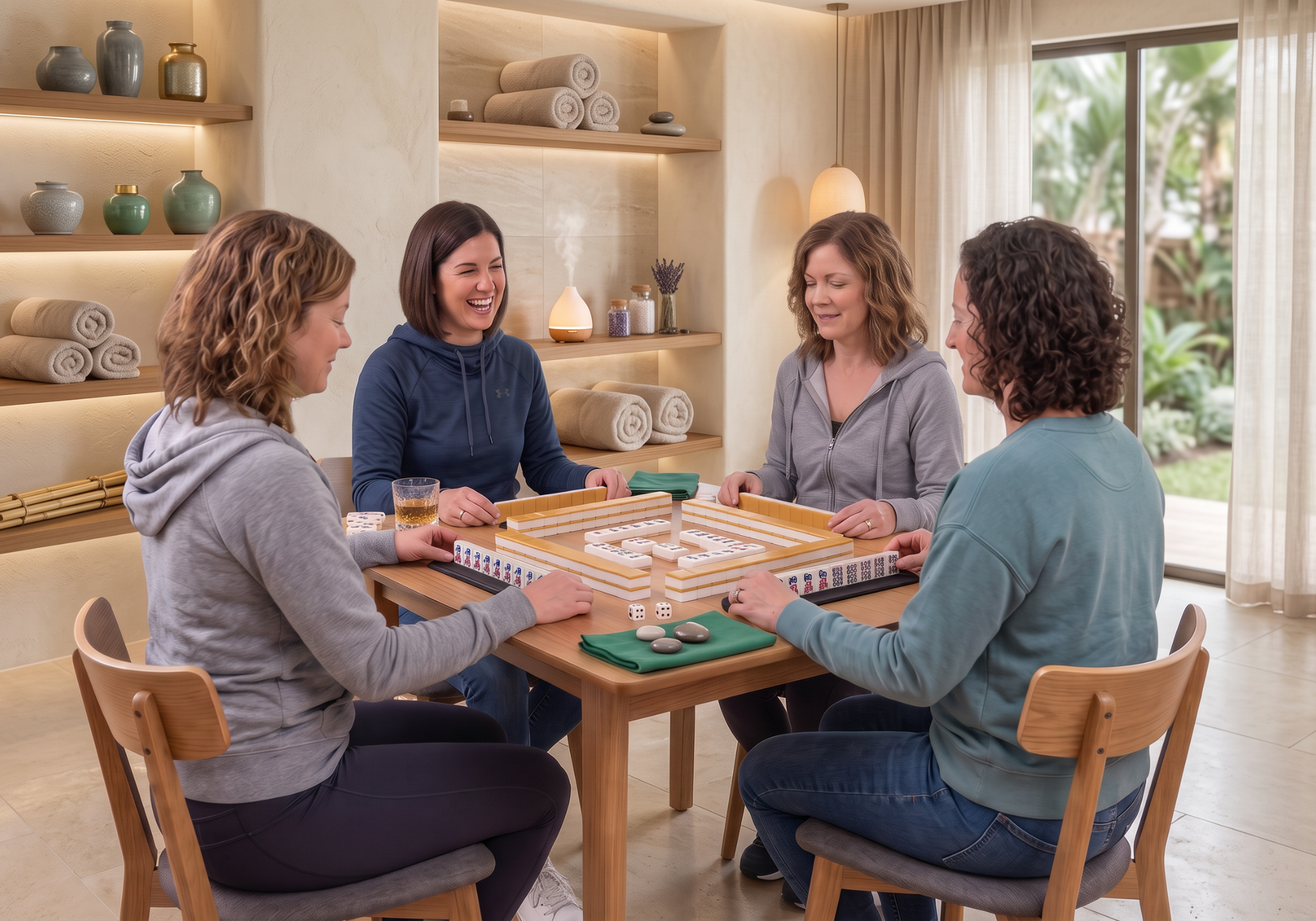
When was the last time you spent two hours doing one thing?
Not doing one thing while checking your phone. Not watching television while scrolling Instagram. Not answering an email in the middle of dinner.
Actually doing one thing.
That may be one of my favorite unexpected benefits of playing mahjong: when I’m at the table, I’m at the table.
Mahjong Demands Your Attention
There are four racks of tiles, a card full of possible hands, discards flying into the middle, calls being made, Jokers appearing, and three other people whose moves might matter to yours.
Try composing an email in your head while keeping track of all that.
Mahjong has a wonderful way of pulling you into the present. You need to notice what you drew. You need to hear what was discarded. You need to decide whether that tile changes your hand. And if you spend too long looking at your phone, there’s a decent chance someone will have to say, “It’s your turn.”
There aren’t many places in modern life where our attention gets that kind of workout.
The Phones Tend to Disappear
One of the things I notice around a mahjong table is how naturally phones get put aside.
Nobody announces a digital detox. Nobody collects phones at the door. We simply get absorbed in the game and suddenly an hour has gone by.
For those couple of hours, the news, the inbox, the errands, and the endless stream of things demanding our attention wait.
It’s Also Time With Other People
Of course, mahjong isn’t quiet meditation. Far from it.
There’s conversation. There’s laughter. There may be a spirited discussion about whether someone can call that tile. There is almost certainly someone lamenting the tile they discarded two turns ago.
That’s what makes this kind of break so good. You’re stepping away from the noise of everyday life without stepping away from other people. You’re present, and connected.
A Different Kind of Break
We often think of taking a break as doing nothing. Sitting on the couch. Watching television. Scrolling for a few minutes that somehow becomes an hour.
Mahjong offers something different: an active break.
Your brain is engaged, your hands are busy, and you’re sharing the experience with friends. Yet somehow, when the game is over, you can feel as though you’ve stepped away from everything else for a while.
So the next time someone asks why you play mahjong, you can tell them it’s strategic. It’s social. It keeps you thinking. There’s usually snacks.
Or you can give them my favorite answer: For a couple of hours, there’s nowhere else I need to be.