
All About Dragons: The Most Misunderstood Tiles in Mahjong
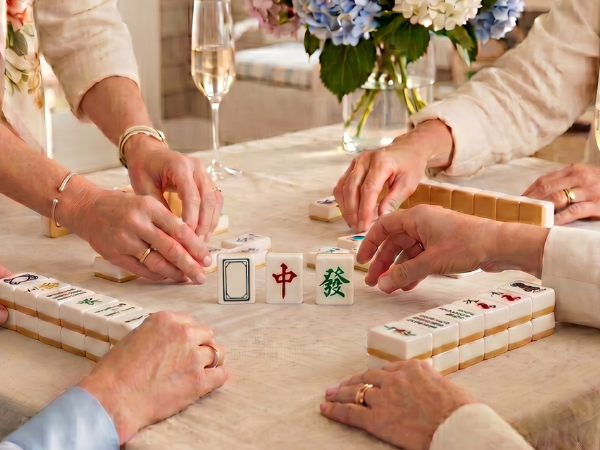
If you’re learning how to play American mahjong, the dragon tiles often raise a few questions.
What are they exactly? Why do they matter? And why does one of them look suspiciously like a bar of soap?
Once you understand how dragons work, they quickly become some of the easiest tiles to recognize and some of the most useful tiles in the game.
The Three Dragon Tiles
Every mahjong set includes three types of dragon tiles:
• Red dragon
• Green dragon
• White dragon
Like most tiles in the set, each dragon appears four times.
Dragons are used to form pairs, pungs, and kongs in many hands on the annual mahjong card. Because of their bold colors and distinctive designs, they tend to become familiar very quickly.
But dragons also have another important role in American mahjong.
They align with the suits.
Dragons and Their Suits
In American mahjong, each dragon corresponds to one of the three numbered suits:
• Red dragons go with the character (crack) suit
• Green dragons go with the bamboo suit
• White dragons go with the dot suit
This relationship shows up frequently on the annual mahjong card, where dragons are often paired with tiles from their matching suit.
Want a handy way to remember which dragon goes with which suit? Here you go:
Green dragons go with bamboo because bamboo is green
Red dragons go with cracks because the crack tiles typically have red numbers.
White dragons (soap) go with dots because soap bubbles are round
Once you know this connection, many hands on the card start to make a lot more sense.
The White Dragon (Also Known as the Bar of Soap)
The white dragon is the tile that tends to confuse beginners the most.
In many mahjong sets, the white dragon appears as a completely blank tile with a simple border around the edge.
Which means the first time you see it, it often looks less like a dragon and more like a small bar of soap.
The white dragon has an unusual history. In traditional Chinese mahjong it represents the “white board,” which was originally shown as a completely blank tile. Many modern sets add a thin border so players can recognize it more easily. The result is a tile that many beginners think looks like a small bar of soap.
Why Dragons Matter
Beyond their connection to suits, dragons are simply useful tiles.
They appear in many hands on the mahjong card and can often be collected early in a game. Because they’re distinctive and memorable, players tend to recognize them quickly when they’re discarded.
Over time, dragons become some of the easiest tiles to track during play.
And like many parts of mahjong, what feels confusing at first soon becomes second nature.
Pull Up a Chair
At first glance, mahjong tiles can feel mysterious.
But once you start recognizing the suits, the winds, and the dragons, the game begins to open up.
And before long, the tile that once looked like a bar of soap becomes just another familiar part of the table.
If You're Learning Mahjong
If you’re new to American mahjong, our beginner guides walk through the tiles, the suits, and how a hand unfolds during play.