
American Mahjong vs Chinese Vs Riichi, What’s the Difference?
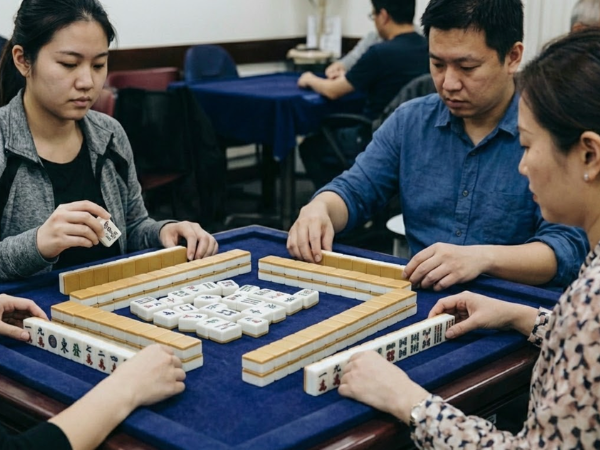
At Blue Moon Mahjong we love all mahjong, the clack of tiles, the small rituals, the way a single hand can swing a whole evening. But our lane is American Mahjong: the club‑friendly, rule‑rich version that turns a living room game into a regular social ritual. Here’s how we see American Mahjong compared with its Chinese and Riichi cousins, and why we think it’s a fantastic way to learn, teach, and gather.
American Mahjong — our focus: social, structured, and delightfully specific
If you’ve ever joined a table where someone produces a laminated card and everyone nods like it’s gospel, you’ve tasted American Mahjong. It’s built around a published hands card (which changes), the Charleston swap, and jokers that act as wildcards. That structure makes it ideal for clubs and repeat meetups: everyone follows the same playbook, and the learning curve feels guided rather than random.
What we love: the learning path is clear. Beginners get a scaffold (the card), social conventions (table etiquette), and rituals that turn play into community. For teachers, that means predictable lessons and fast wins, students leave confident and ready to join any table.
Chinese Mahjong — fast, regional, and reactive
Chinese variants (Cantonese, Taiwanese, Hong Kong, etc.) are often quicker and more improvisational. They emphasize calling melds, reading the wall, and fluid, tactile play. There’s less centralized paperwork and more local house rules, which can be charming, and confusing for newcomers.
How it compares: Chinese styles reward intuition and speed. They’re great if you love learning by immersion, but they’re less consistent for classroom-style teaching because every group plays a little differently.
Riichi (Japanese) Mahjong — precise, strategic, and tournament‑bred
Riichi is its own beautiful beast: quiet, mathematically precise, and heavy on timing. With riichi declarations, dora bonuses, and furiten penalties, it’s engineered for competitive thought. Players track discards and probability with near‑scientific focus.
How it compares: Riichi is a rewarding path if you crave advanced strategy and competitive depth, but it’s not the easiest starting point for social beginners who want a friendly table right away.
Why we champion American Mahjong
We want more people to sit down and play without the intimidation. American Mahjong’s clear rules, shared hands card, and social rituals make it teachable, repeatable, and fun for groups. It balances strategy with accessibility and gives clubs a reliable way to welcome newcomers. That’s why we build tools, mats, cards, and guide, that make the first few sessions less fumble and more high‑five.
Pick a style, learn the local rules, and enjoy the game. If your goal is community, teachability, and a guaranteed social night, American Mahjong is a great place to start. Join us at the table… we’ll save you a seat.