
The Charleston in Mahjong: It’s Not a Dance. It’s a Power Move
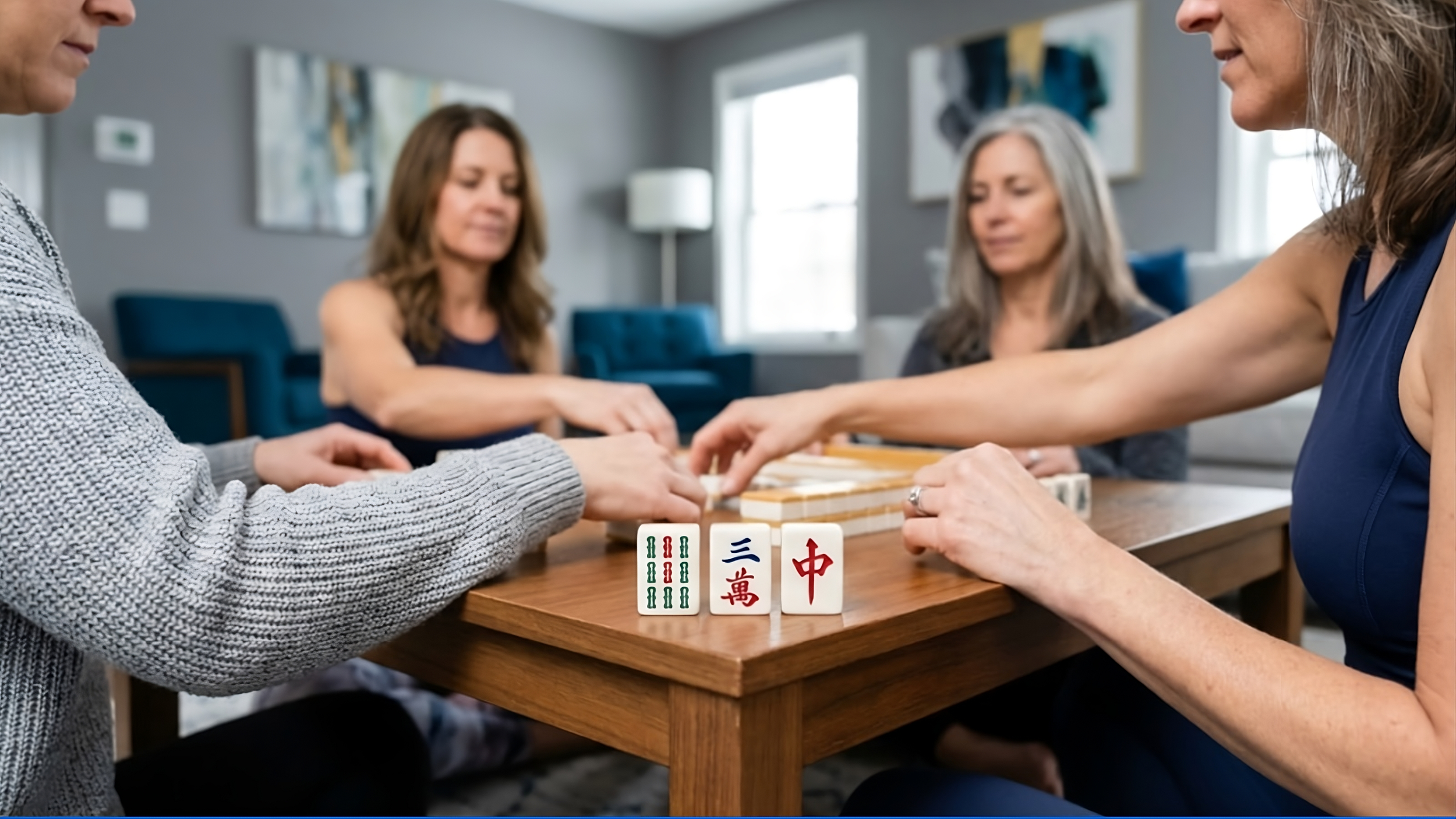
If you’re learning how to play American mahjong, the Charleston is one of the first things that can feel confusing.
Tiles are passed around the table in several rounds before the game even begins. At first it may feel random or chaotic, especially if you’re still getting familiar with the tiles.
But the Charleston isn’t random at all.
In fact, it’s one of the most strategic moments in the entire game.
Once you understand how the Charleston works, you’ll start to see it less as a rule to follow and more as an opportunity.
What the Charleston Is
The Charleston happens at the beginning of every hand of American mahjong.
Before the first tile is drawn, players pass tiles around the table in a series of organized exchanges. These passes allow players to improve their starting racks before the game begins.
The Charleston serves an important purpose in the game. It reduces the role of pure luck by giving players an opportunity to shape their starting tiles. It also creates a small social moment at the table — the first few minutes of a hand where tiles move, players study their racks, and the game begins to take form.
The Charleston typically happens in two rounds.
The Mandatory Charleston
The first round is mandatory and always includes three passes:
Pass three tiles to the right
Pass three tiles across the table
Pass three tiles to the left
During each pass, every player selects three tiles they don’t want and sends them in the specified direction.
These exchanges allow players to start shaping their rack before the first tile is ever drawn.
The Optional Charleston
After the mandatory Charleston, players may choose to do a second Charleston, which is optional.
If all four players agree, the optional Charleston follows the same pattern in reverse:
Pass three tiles to the left
Pass three tiles across the table
Pass three tiles to the right
If even one player declines, the optional Charleston stops and the game begins.
Some players love the extra opportunity to refine their rack. Others prefer to move on and start drawing tiles.
Both approaches are common at mahjong tables.
The Blind Pass
Some groups include a small variation called a blind pass during the final pass of the optional Charleston.
In a blind pass, a player may pass one, two, or three tiles even if they received fewer than three tiles in the previous pass. To do this, they simply add tiles from their own rack to complete the pass.
For example, if a player receives only two tiles during the previous pass, they can add one tile from their rack and still pass three tiles along.
The blind pass introduces a little extra unpredictability to the exchange.
Some tables enjoy the additional flexibility it creates, while others prefer to skip it and keep the Charleston simple.
Like many small variations in mahjong, the decision is usually left to the table.
Why the Charleston Matters
The Charleston is more than a warm-up.
It’s your first opportunity to shape the direction of your hand.
When you look at your starting tiles, you’ll likely see several possible directions you could go based on the annual mahjong card. The Charleston allows you to trade away tiles that don’t support your plan while hoping to receive tiles that move you closer to a strong hand.
Many players discover their eventual hand during the Charleston.
The Charleston Requires Decisions
One of the most interesting parts of the Charleston is that you must pass exactly three tiles during each exchange.
That means you’re always making choices.
Which tiles are least useful? Which suits are you willing to give up? Are there tiles you want to keep hidden because they might reveal your strategy?
These small decisions begin shaping the hand long before the first tile is drawn.
A Moment of Quiet Strategy
Although the Charleston happens quickly, experienced players often treat it as a moment of quiet strategy.
They look for patterns in their tiles. They consider which suits appear strongest. They begin imagining which hands on the card might be possible.
At the same time, everyone else at the table is doing exactly the same thing.
No one knows yet which direction the hand will take.
The table is still full of possibilities.
Why the Charleston Is a Power Move
Beginners often think the game really starts when the first tile is drawn.
But seasoned players know the hand often begins during the Charleston.
A strong Charleston can turn a scattered rack into a focused one.
And even if the tiles don’t cooperate perfectly, the process helps narrow your options and start the hand with intention.
In other words, the Charleston isn’t just a formality.
It’s your first strategic move.
Pull Up a Chair
If the Charleston feels confusing the first time you see it, don’t worry.
Most players feel that way at first.
But after a few hands, the rhythm becomes familiar. Tiles move around the table, racks improve, and the game begins to take shape.
Before long, the Charleston stops feeling mysterious.
It simply becomes the way every hand begins.
If You're Learning Mahjong
If you're new to American mahjong, our beginner guides walk through the tiles, the card, and how a hand unfolds step by step. Shop here.