
All About Winds: The Directional Tiles in Mahjong
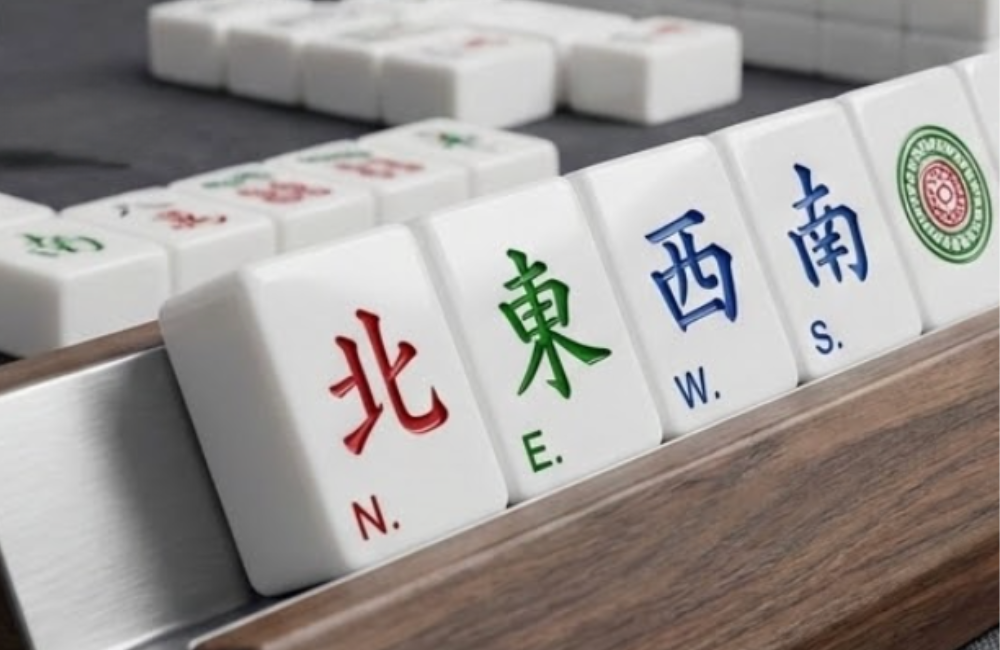
If you’re learning how to play American mahjong, the wind tiles are usually some of the first tiles you recognize.
They’re clearly labeled: East, South, West, and North.
But new players sometimes wonder what winds actually do in the game. Are they special? Are they worth more? Do they affect the direction of play?
The answer depends on the version of mahjong you’re playing, but in American mahjong the winds are simply another group of tiles that can be used to build specific hands.
The Four Wind Tiles
Every mahjong set includes four wind tiles:
• East
• South
• West
• North
Like most tiles in the set, each wind appears four times.
That means there are sixteen wind tiles in a standard mahjong set.
They’re easy to recognize because each tile displays the first letter of the direction.
How Winds Are Used in American Mahjong
In American mahjong, winds function much like dragons or numbered tiles. Winds are suitless, however, and don’t align with any specific suit, so that is one less thing to worry about when you building a hand that includes winds.
Winds can be used to form:
• pairs
• pungs (three identical tiles)
• kongs (four identical tiles)
You’ll see wind tiles appear in many hands on the annual mahjong card, sometimes on their own and sometimes combined with other tile groups.
The NEWS Hand
One of the most recognizable wind combinations in American mahjong is NEWS.
This hand uses one of each wind tile:
• North
• East
• West
• South
Players usually remember the order easily because it spells the word NEWS.
In many versions of the mahjong card, NEWS is used as a set of single tiles within a larger hand.
There are a couple of important rules that beginners should know about this combination.
First, jokers cannot be used for NEWS. Because the tiles are singles, each one must be the actual wind tile.
Second, you cannot call a tile to complete NEWS unless that call gives you mahjong. Since these tiles are singles rather than sets, players typically have to draw them.
These small rules often surprise beginners, but they become second nature after a few games.
Why They’re Called Winds
The names East, South, West, and North come from traditional Chinese mahjong, where winds play a larger role in the structure of the game.
In those versions, the winds help determine the dealer and the direction of play around the table.
American mahjong kept the wind tiles but simplified how they’re used.
Today, most American players simply treat winds as another tile group when building combinations.
Winds Are Easy to Spot
One reason winds are beginner-friendly is that they are clearly labeled and visually simple.
After just a few games, most players recognize them instantly.
And because there are only four types, they’re easy to track as the game unfolds.
Pull Up a Chair
Like many parts of mahjong, wind tiles may look unfamiliar at first.
But after a few hands, they become just another natural part of the table.
East, South, West, North.
Four simple tiles that help keep the game moving.
If You're Learning Mahjong
If you're new to American mahjong, our beginner guide explains the tiles, the suits, and how a hand unfolds during play.