
The Unwritten Rules Nobody Tells You
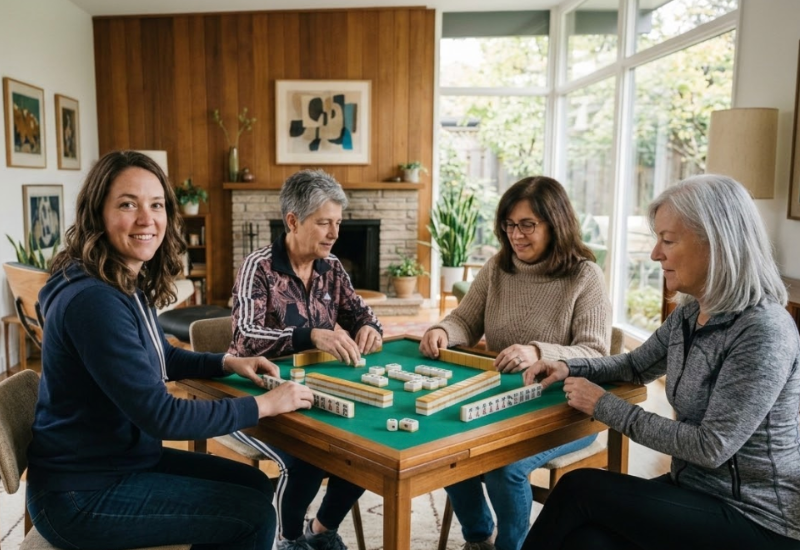
Mahjong has a rulebook. What it doesn't have is a guide to the stuff that actually determines whether people want to play with you. These are the unwritten rules, the ones you absorb after enough games, or learn the awkward way after one bad session.
Don't slow the table down. Everyone has moments of indecision, but chronic slow play is the fastest way to become someone people don't invite back. If you're new, it's fine to take your time. Just be aware of the table's rhythm and try to match it. When it's your turn, be present.
Let discards land before you pounce. There's a half-second courtesy window after someone discards before you claim the tile. Calling before the tile has even left their hand feels aggressive and makes the game feel transactional rather than social. Patience is part of the game.
Don't touch other players' tiles. This one sounds obvious until you're reaching across the table to point something out. Other players' racks and exposures are theirs. Look, don't touch. Even with good intentions, it crosses a line.
When you want a joker, ask for it. If you have the tile that matches a joker in someone's exposure, you're entitled to make the exchange, but the right way to do it is to ask the player, not just reach in. A simple "may I exchange for your joker?" keeps things respectful and gives the moment the acknowledgment it deserves.
Keep your phone and drinks off the table. The tiles need the space, and frankly so does the experience. A phone face-up at the table pulls your attention and signals to everyone else that you're half somewhere else. Drinks near the tiles are one bumped elbow away from a very bad night. Side table, cup holder, pocket — anywhere but the table.
Don't coach unless you're asked. Watching a new player make a suboptimal move and staying quiet is genuinely hard. Do it anyway. Unsolicited advice, even well-meaning, undermines other players' confidence and changes the game for everyone else at the table. If someone asks for help, great. Otherwise, let them play their hand.
Keep your reactions neutral when you draw. Big visible reactions to your tiles, good or bad, give information away and make other players feel like they're playing against a poker tell rather than a person. Part of etiquette is keeping a reasonably level face.
Let the winner show their hand first. When someone calls Mah Jongg, give them their moment. Wait until they've displayed their winning hand before you flip yours and start talking about the one tile you were waiting for. It's a small gesture, but it honors the win and keeps the energy generous rather than competitive.
Say thank you. Win or lose, the person who hosted set up the table, sorted the tiles, and fed you. The players who came chose to spend their time with you. A genuine thanks at the end of the game costs nothing and means everything.