
Your Brain on Mahjong
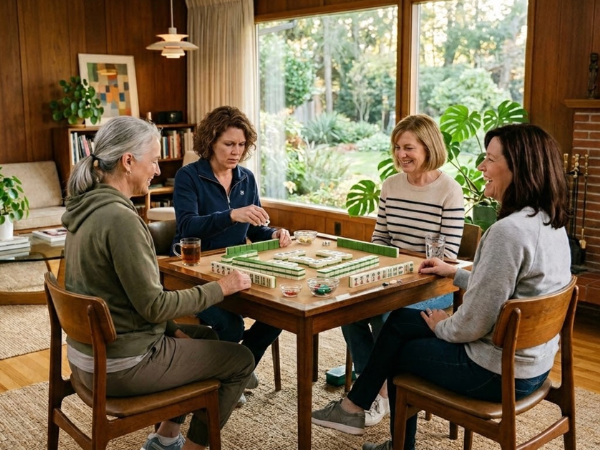
Let's be honest: most hobbies aren't great for you. Doom-scrolling is not a hobby. Binge-watching is not a hobby. Mahjong, on the other hand, might actually be making you sharper.
We're not here to oversell it. Mahjong is fun first and foremost. But the cognitive benefits are real, and researchers have been paying attention.
Pattern Recognition at Its Best
At its core, mahjong is a pattern game. You're constantly evaluating your hand, tracking what other players are discarding, calculating which tiles you still need, and adjusting your strategy in real time. That's a lot of mental juggling.
Studies on tile-based games, including several focused specifically on mahjong, have found associations with improved working memory and processing speed in older adults. A 2006 study published in the British Journal of Health Psychology found that mahjong players showed cognitive benefits comparable to other mentally stimulating activities. More recent research out of Hong Kong has explored its potential as a tool for cognitive health in aging populations. The picture is still developing, but the early findings are encouraging.
The Social Brain
Here's what the research also tells us: social isolation is genuinely bad for your brain. And mahjong is, at its heart, a social game. You need other people. You read their expressions. You have conversations. You argue cheerfully about house rules.
That kind of low-stakes, face-to-face social engagement is increasingly rare, and it turns out it's good for us. Regular social interaction is linked to lower rates of depression, better memory, and even reduced risk of cognitive decline. Mahjong checks that box in a way that solo puzzles simply can't.
Lessons the Tiles Teach You
There's also something to be said for what mahjong teaches beyond the brain health stats. The game asks you to hold multiple possibilities in mind at once, adapt your plan when things don't go your way, and stay patient when you're waiting on that one tile that just won't come.
Experienced players will tell you that mahjong has made them better at sitting with uncertainty. At reading a room. At knowing when to push and when to fold. Those aren't skills that stay at the table.
So yes, play because it's fun. Play because it's social. But also know that your brain is doing more work than it looks like, and it's probably better for it.